Themed dessert table ideas with edible images: A guide for cohesive party spreads
Estimated reading time: 12 minutes
Key Takeaways
- Edible images anchor a theme by telling a story across desserts and decor.
- Repeat motifs across treats and tableware to create a cohesive color story.
- Prioritize readability at dessert scale and avoid overcrowding toppers.
- A well-planned workflow with proofing and budgeting results in a polished spread.
- Edible prints act as a language that unifies desserts, signage, and linens.
Table of contents
- Section 1: Core concept — themed dessert table ideas with edible images
- Section 2: Customizing dessert toppers with printed icing
- Section 3: Coordinating colors with edible designs
- Section 4: Matching dessert table accessories
- Section 5: Practical workflow and layout planning
- Section 6: Sourcing, licensing, and production considerations
- Section 7: Budgeting and time management
- Section 8: Case studies or mock layouts
- Section 9: Quick-start kit for readers
- Section 10: SEO and reader value notes
- Section 11: Key takeaway for the reader
- FAQ
- Final notes and call-to-action
Section 1: Core concept — themed dessert table ideas with edible images
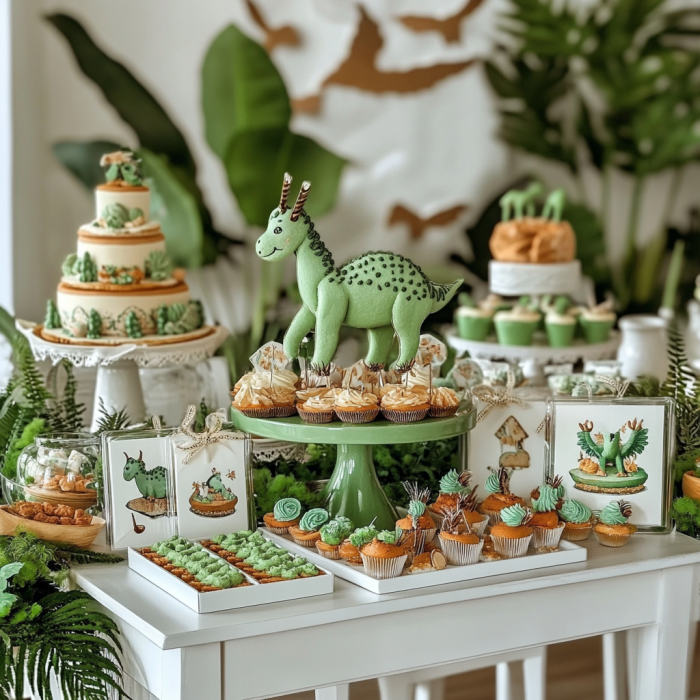
The core idea is simple: edible images anchor a theme by telling a story through motifs, icons, and patterns. When you choose a theme, let the edible designs do some of the talking, then repeat those motifs across desserts and decor for cohesion.
- How to brainstorm by event type
- Birthday: use superhero emblems on cupcakes, starry cookies, and cake pops that echo a party color palette.
- Wedding: lace patterns, monograms, or floral silhouettes carried on cookies and cake toppers.
- Baby shower: baby-themed icons, pastel animals, or gentle alphabets across cookies and mini treats.
- Corporate: brand logos, product silhouettes, or mission icons on a mix of cookies and cake pops.
- Thematic directions that leverage edible imagery
- Whimsical fairytale: princess crowns, magical swirls, and forest silhouettes on a soft color base.
- Tropical paradise: palm leaves, fruits, and ocean motifs printed on cookies and macarons.
- Retro glam: geometric prints or metallic accents printed onto toppers with bold contrasts.
- Visuals you might see
- Example 1: A princess-themed table with fairy-tale borders on cupcakes and cookies, tying to a soft pink color story.
- Example 2: A tropical table where fruit slices appear on cookies and on wafer-based toppers, echoing bright greens, teals, and sunny yellows.
- Example 3: A retro-glam dessert bar featuring black-and-white prints on cake pops and coordinating liner patterns.
– Why this matters: edible images anchor the theme, making the spread feel intentional rather than random. They provide a consistent visual language that ties desserts, toppers, and decor together.
- Visuals to consider
- Close-up of a cupcake with a crisp edible image of a tiny superhero badge, matching a banner and the color of the frosting.
- A plate of cookies with repeating floral motifs that mirror a lace-styled invitation.
- Cake pops arranged in a circular display, each with a consistent color-chip and small icon.
Section 2: Customizing dessert toppers with printed icing
This section walks you from concept to finished toppers. Printed icing toppers are a powerful way to carry the theme with crisp detail on every bite.
- Walkthrough: concept to file prep
- Create templates in Canva or Photoshop that match your chosen shapes (circles for cookies and cupcakes; sticks for cake pops).
- Export high-resolution files designed for icing sheets. Keep text to readable sizes (aim for 1/2 inch or larger for small prints).
- Prepare printable files for your icing sheets, then print with edible ink on food-grade printer stock.
- Printing and mounting
- Use icing sheets for vivid, opaque images. They reproduce color more sharply than wafer paper.
- Trim carefully with sharp scissors or a precision blade. Mount the toppers on thin sticks or approved toppers that sit well on smooth frosting.
- For best results, apply toppers to frosting that has a light sheen or is stabilized with a small dab of piping gel to prevent slipping.
- Design considerations
- Readability at dessert scale: keep key elements large enough to read at 1–2 inches on cookies and 2–3 inches on cupcakes.
- Avoid overcrowding: one strong motif per topper keeps the design legible.
- Layer toppers with fondant elements if needed and place on a clean, smooth frosting surface.
- Budget and timeline
- Typical costs: $0.50–$2.00 per sheet of icing, depending on sheet size and printer type.
- Printing and proofing: allow 1–2 days for proofs and final prints to arrive. If you’re printing in-house, plan a similar window for calibration and testing.
- Practical tips
- Use food-grade printers; calibrate color before large runs.
- Ensure you trim toppers fit the dessert size; consider the depth of the frosting and the curvature of cupcakes.
- If using cookies, apply toppers after baking and cooling, not while hot.
- Visuals to consider
- A cupcake with a round edible topper featuring a bold monogram, mounted on a sturdy lollipop stick, with a glossy frosting base.
- A batch of cookies with small, crisp images printed on icing sheets, placed on white sugar cookies for contrast.
- Cake pops with printed toppers aligned along a central display tower, each pop showing a different but related motif.
Keywords used in this section: Customizing dessert toppers with printed icing is the main phrase here.
Section 3: Coordinating colors with edible designs
Color is the heartbeat of a cohesive dessert table. This section covers how to choose color harmonies that tie edible prints to frosting, fondant, and tableware.
- Color theory basics for edible prints
- Harmony means choosing analogous or complimenting colors so images feel integrated with frosting and table linens.
- Contrast helps lead the eye to a focal point, like a signature cake or centerpiece cupcake tower.
- Focal colors: pick 1–2 colors as anchors, then use accents from the edible images to reinforce the palette.
- Building a cohesive palette
- Tie edible images to the tableware by repeating key colors across plates, napkins, and signage.
- Use swatches or proofs to check how edible ink looks when refrigerated.
- Consider the effect of lighting on color perception; test under event lighting if possible.
- Color testing workflows
- Print proofs on regular paper first to check the layout and contrast, then move to edible proofs if you need exact hues.
- Refrigeration can shift vibrancy; keep a note of how colors shift after cold storage.
- Maintain color consistency by standardizing ink calibration and frosting bases across all desserts.
- Palette example directions
- Neutral base with pops of theme colors: ivory or milk white with bright accents like coral or teal.
- Monochrome with accents: black and white imagery with gold or pink highlights for a modern vibe.
- Visuals to consider
- A neutral fondant base on cupcakes with vivid edible prints that pop in a controlled color scheme.
- A color-matched tableau where the napkins, plate rims, and edible images share a single accent color.
Keywords used in this section: Coordinating colors with edible designs (applies to concept) and related color theory terms. For more on vibrant colors, see Tips for Vibrant Edible Print Colors.
Section 4: Matching dessert table accessories
A cohesive table needs more than desserts. Matching tableware, linens, and signage reinforce the theme and guide guests through the space.
- Align tableware with edible designs
- Choose plates, napkins, and stands in colors or motifs echoed by your edible images.
- Consider liners and wrappers that reference cupcake prints for a printed, unified look.
- Quick tips for linens and signage
- Select table linens in a color family that’s present in the edible designs, with a small accent color from the prints.
- Use signage with minimal text but consistent typography that mirrors the style of your toppers and cookies.
- Layout principles
- Create a visual flow from the entrance to the dessert station using tiered displays and a clear focal point, such as a cake centerpiece.
- Ensure that the height of items varies to avoid a flat look and to keep the eye moving toward the center of the table.
- Quick sourcing checklist
- Check if the liners on cupcakes match the prints on the toppers.
- Confirm that napkins, plates, and stands share the same or a harmonious color story.
- Use simple props like doilies or acrylic stands that echo the motifs in your edible images.
Visuals to consider
- Visual description: A dessert table with tiered stands, matching pink napkins, and cookie prints that echo the same floral motif printed on toppers.
- Visual description: A table featuring a central cake with edible-image toppers, surrounded by coordinating plates and signage in the same color family.
Keywords used in this section: Matching dessert table accessories. Edible Prints for Cookies: Transform Your Baked Goods into Stunning Edible Art.
Section 5: Practical workflow and layout planning
A solid workflow keeps the project on track. This section lays out a step-by-step planning timeline and layout ideas that work for different table shapes.
- Step-by-step planning timeline
- Concept: define the theme and edible-image scope.
- Design files: create templates in Canva/Photoshop that match your dessert shapes.
- Printing: print edible images on icing sheets with edible ink.
- Assembly: trim, apply toppers, and bind with the right sticks.
- On-site setup: assemble at the venue with a clear plan for placement.
- Layout templates
- Rectangular table: place a cake center, cupcakes flanking on both sides, cake pops at the ends for a balanced look.
- Round table: create a tiered tower focus, with smaller treats arranged around the base to encourage a circular flow.
- Margin and sizing guidelines for edible images
- Cookies: 1–2 inch images.
- Cupcakes: 2–3 inch round images.
- Cake pops: 2–2.5 inch tops.
- Allocate about 20–30% of table space per dessert type to avoid crowding.
- On-site setup checklist
- Arrive early and pre-stage plates, napkins, and signs.
- Prepare a quick touch-up kit for frosting, toppers, and signage.
- Assign a point person to monitor the flow and restock as needed.
- Visuals to consider
- Visual description: A layout sketch showing the rectangular table with a cake in the center, cupcakes on one side, pops on the other, and a banner above.
- Visual description: A round table display with a central stacked tier and surrounding smaller platters, all aligned to a common color palette.
Keywords used in this section: Themed dessert table ideas with edible images (context); coordinating colors with edible designs (workflow); matching dessert table accessories (layout considerations).
Section 6: Sourcing, licensing, and production considerations
This section covers where to get high-quality edible images, licensing basics, and common production fixes.
- Where to obtain edible images and licensed artwork
- Look at Etsy and dedicated template sources like Icing Images for design packs and templates.
- Consider licensed artwork only where you have permission for the event; use templates designed for edible printing to minimize risk.
- Licensing basics
- Personal use is usually allowed with many designs, but commercial use or client events may require a license or written permission.
- Be careful with characters or known IP; avoid using characters from movies or games unless you have permission.
- Common production issues and fixes
- Image blurring: ensure high-resolution files and use proper edible ink and sheets.
- Color shifts: calibrate the printer and test with proofs before final runs.
- Adhesion problems: prepare a smooth frosting surface and use a thin layer of piping gel or edible glue as needed.
- Visuals to consider
- Visual description: A printer tray loaded with icing sheets, next to a set of cookies with crisp edible images.
- Visual description: A close-up of an edible image on a cookie showing clear lines and consistent color, with a proof sheet beside it for color reference.
Keywords used in this section: Themed dessert table ideas with edible images (overall context); edible images terms appear throughout; custom topping references are not required here. For licensing basics and questions, see Frequently Asked Questions About Edible Printing.
Section 7: Budgeting and time management
Budgeting and time management keep the project practical. Here are the costs, buffers, and scalability ideas you need.
- Rough cost ranges
- Edible sheets and ink starter kits: roughly $20–$50.
- Toppers (per piece): about $0.10–$0.50 for simple designs, higher for premium images.
- Accessories (stands, doilies, signage): $10–$50 depending on DIY or ready-made options.
- For a small event, a turnaround of $50–$150 is typical; larger events cost more but remain scalable with planning.
- Time buffers
- Printing and proofing: allow 2–3 days for proofs and adjustments.
- On-site setup: plan at least 1 day for large events; smaller events can be set up in a few hours.
- Scaling guidance
- Small/DIY events: more handcrafting, tight timelines, and local sourcing.
- Larger events: longer planning horizons, a dedicated print-and-ship timeline, and coordinated signage and layout.
- Visuals to consider
- Visual description: A simple budget breakdown chart showing sheets, toppers, and accessories with line items and totals.
- Visual description: A calendar timeline with key milestones from concept to setup.
Keywords used in this section: Themed dessert table ideas with edible images (overall), matching dessert table accessories (budgeting context). For cost-saving ideas, see Cost-Saving Tips for Edible Printing.
Section 8: Case studies or mock layouts (optional)
Case studies show how the plan plays out in real life. Here are three scenarios that illustrate applying the four keywords.
- Scenario 1: Birthday – baseline vs. post-implementation with superhero edible images
- Themed dessert table ideas with edible images: Post-implementation uses bold hero images on cupcakes and cake pops; prints echo the party’s color scheme.
- Visual description: A simple arrangement before versus after: plain cupcakes versus a flyer-inspired display with hero images on each treat.
- Outcome: A brighter, cohesive look that pulls guests toward a focal point and makes the party more memorable.
- Scenario 2: Wedding – monogram printed icing toppers
- Customizing dessert toppers with printed icing: Cookies and macarons wear delicate monograms; toppers echo the jewelry-inspired gold accents on the linens.
- Coordinating colors with edible designs: A neutral base with soft metallic pops to unify the pieces.
- Outcome: A timeless feel with a polished, coordinated dessert bar.
- Scenario 3: Corporate – logo edible images and branded signage
- Matching dessert table accessories: Logo images on pops align with branded stands and signage.
- Outcome: A seamless brand experience that communicates the company’s identity from entry to dessert.
Visuals to consider
- Visual description: Before and after shots for each scenario, focusing on the alignment of edible images with the table design.
- Visual description: A round table with a cake centerpiece and printed icing toppers radiating out to cookies and pops.
Keywords used in this section: Scenario 1 uses Themed dessert table ideas with edible images, Scenario 2 uses Customizing dessert toppers with printed icing, Scenario 3 uses Coordinating colors with edible designs and Matching dessert table accessories. For corporate case study, see Edible Logo Printing for Corporate Events.
Section 9: Quick-start kit for readers
A ready-to-use starter kit helps readers jump in quickly.
- One-page starter checklist
- Theme selected? Palette built? Images sourced/printed? Accessories matched? Layout sketched?
- Editable template
- Color palette with five swatches.
- Layout grid tailored to common table shapes (rectangular, round).
- Mini glossary
- Edible images: printed icing or wafer designs.
- Printed icing: frosting sheets used for toppers.
- Toppers: mounted prints on sticks or picks.
- Coordinating colors: palette harmony across elements.
Visuals to consider
- Visual description: A printable starter page with a color palette and a small grid for layout planning.
- Visual description: A mock-up of a top-down dessert table plan that shows where each dessert type lives on the grid.
Keywords used in this section: Themed dessert table ideas with edible images, customizing dessert toppers with printed icing, coordinating colors with edible designs, matching dessert table accessories. For DIY edible images, see DIY Edible Images for Cupcakes and for design software, Best Software for Edible Print Design.
Section 10: SEO and reader value notes
This section ensures search-friendly content while maximizing reader value.
- Keyword usage
- The primary keyword appears in the title and in the first 1–2 sentences of the intro.
- The other keywords are woven naturally through sections: customizing dessert toppers with printed icing, coordinating colors with edible designs, matching dessert table accessories.
- Value adds
- Describe visuals and provide downloadable templates or printable starter sheets to help readers implement the plan.
- Emphasize a practical, repeatable workflow so readers can reuse ideas for different events.
Visuals to consider
- Visual description: A sample color palette card with a matching edible-ice color test strip description.
- Visual description: A mock layout showing how a template translates into real-world placement.
For more on color testing: Tips for Vibrant Edible Print Colors.
Section 11: Key takeaway for the reader
– Core takeaway: A cohesive themed dessert spread is achievable by tying edible imagery to color, toppers, and table accessories through a clear workflow and practical sourcing guidance.
Keywords used in this section: Themed dessert table ideas with edible images (recap), matching dessert table accessories (closing emphasis).
– Visual: A final “before and after” summary image showing a table transformed by cohesive edible designs.
FAQ
Edible images are printed designs applied to icing sheets or wafer paper that adhere to cakes, cookies, and other desserts using edible inks.
Q: Are edible images safe for food?
Yes. Reputable icing sheets and edible inks are specifically designed for food use. Follow manufacturer guidelines for storage and handling.
Q: How long do edible images last on desserts?
Typically, edible images remain vibrant for the duration the dessert is displayed, provided they’re kept out of direct sun and extreme heat. Refrigeration may affect some image sharpness over time.
Final notes and call-to-action
Visuals throughout the post demonstrate how to translate ideas into tangible setups. Expect 2–3 visual example descriptions per major section and a few layout visuals to anchor ideas.
Templates and downloads referenced in the post are designed to help planners and bakers build cohesive dessert spreads. While no links are provided here, you can adapt the described templates to fit your needs.
Ready to start? Download the Quick-Start Kit and templates to begin building your own cohesive dessert spreads with edible images, toppers, palettes, and layouts today.