Cartoon-themed edible prints: A Fan Guide to Stunning Cake Designs
Estimated reading time: 6 minutes
Key Takeaways
- Cartoon-themed edible prints offer edible images printed on frosting sheets or wafer paper for vibrant, precise designs.
- A clear workflow from artwork to mounting keeps projects safe, consistent, and repeatable.
- Color calibration and safe handling protect flavor and texture while achieving strong visuals.
- Ideas span manga, anime, and kid-friendly toppers when licensing and allergen labeling are handled thoughtfully.
- With practice, you can achieve professional-looking edible art using common kitchen tools.
Table of contents
- Introduction
- What are cartoon-themed edible prints?
- Safety and dietary notes
- manga cake art ideas
- anime-inspired cake decorations
- kid-friendly cartoon cake toppers
- Step-by-step guide: creating cartoon-themed edible prints
- Tools, materials, and setup
- Design ideas gallery and prompts
- Troubleshooting and best practices
- Copyright, licensing, and ethical considerations
- Content format and multimedia
- User value and takeaway
- Frequently Asked Questions
Introduction
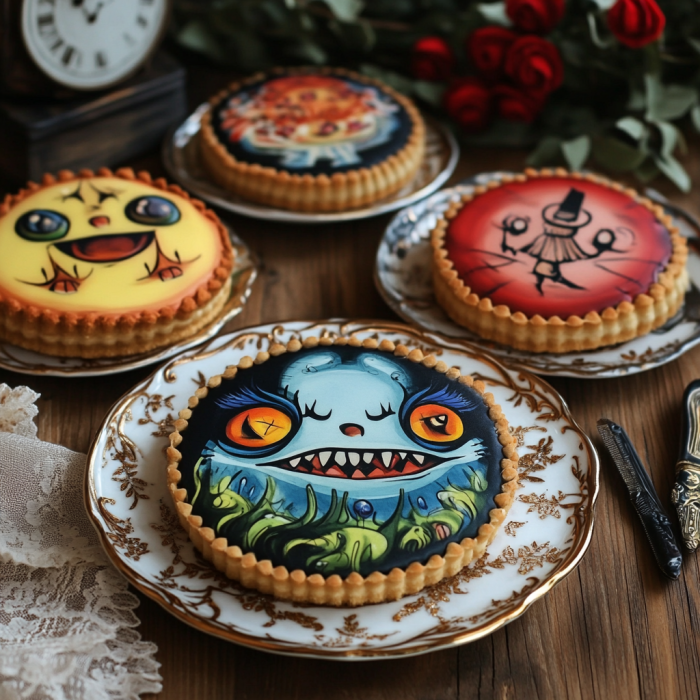
Cartoon-themed edible prints bring your favorite drawings to life on a cake. They are edible images created from artwork printed on frosting sheets or wafer paper using edible inks, then applied to cake surfaces for precise, vibrant designs. In this fan guide, you’ll discover practical, step-by-step ideas to turn cartoons, manga, and anime into edible art. Whether you’re a DIY hobbyist or a devoted fan, you’ll learn safe methods, quick design prompts, and repeatable workflows for many celebrations.
For more on edible icing sheets and how to use them, see edible icing sheets guide.
What are cartoon-themed edible prints?
Cartoon-themed edible prints are edible images turned from artwork to frosting sheets or wafer paper. They let you reproduce lines, colors, and even textures on a cake with high accuracy. They work well for detailed portraits, character faces, and action scenes. Materials you’ll encounter include frosting sheets (also called icing sheets) and wafer paper, edible ink, and food-grade coloring. Learn more about icing sheets and how to use them.
If you’re curious how icing sheets differ from other options, see what’s the difference between icing sheets and frosting sheets.
Safety and dietary notes
- Allergen awareness: If a cake is for a mixed group, label ingredients and confirm gluten-free or dairy-free requests with the guest of honor or host.
- Cross-contamination risk: Use separate print run materials and tools. Wash hands and surfaces, and store edible prints away from non-edible items.
- Labeling and communication: Include a simple card on the cake stating that the prints are edible and note any allergen concerns. For more guidance, see Nut-free and gluten-free edible supplies.
manga cake art ideas
Manga cake art ideas capture a bold, graphic vibe with clear, crisp lines. Use the prompts below to translate manga aesthetics onto edible prints.
Design prompts and guidance
- Line art portraits and character faces with bold black outlines. Emphasize strong contrast and clean edge lines.
- Speech bubbles and caption styles that mimic manga dialogue. Use short phrases to fit the curved surface of a cake.
- Dynamic action poses captured as single-panel or multi-panel layouts. Create a mini “story” across the cake surface.
For color and texture tips, see Tips for Vibrant Edible Print Colors.
anime-inspired cake decorations
Anime-friendly ideas bring familiar motifs to life with bold silhouettes, cute chibi forms, and glow-like lighting effects. Here’s how to translate anime aesthetics into edible prints and cake décor.
Design approaches and examples
- Silhouettes of iconic characters or emblem silhouettes for clean, striking visuals. Silhouettes read well from a distance and simplify busy scenes.
- Chibi-style characters for cute, kid-friendly vibes. Exaggerated eyes and rounded shapes read well on cake surfaces.
- Emblem accents and insignias that reference anime series without direct character depictions. This keeps the design recognizable yet legally safer.
- Gradient backgrounds and glow effects mimicking anime lighting. Use soft transitions and subtle highlights to imply glow.
- Practical integration with cake structure: top toppers, edible image panels, and side panels. Consider where the print will sit for best visibility.
Implementation tips
- Color palettes: Choose bold hues balanced with neutral tones to avoid overpowering the cake flavor. See color calibration tips: Tips for Vibrant Edible Print Colors.
- Layering with fondant or buttercream: Print images on sheets suited to the surface, then mount on fondant panels or directly on buttercream for a clean look.
- Flavor coordination: Design decisions should harmonize with your cake flavor and theme to avoid clashing sensations.
Kid-friendly cartoon cake toppers
Kid-friendly toppers are designed for younger fans and family celebrations. They should be safe, easy to handle, and visually appealing to kids.
- Safety emphasis and design ideas: Use kid-safe materials, non-toxic edible decorations, and avoid shapes with sharp edges or tiny parts that could detach.
- Practical tips for ease of use: Opt for toppers with simple attachment methods, stable supports, and a design that won’t topple the cake.
- Allergy-safe considerations: See Nut-free and gluten-free edible supplies: nut-free gluten-free edible supplies.
Step-by-step guide: creating cartoon-themed edible prints
A solid workflow helps you move from idea to a finished cake. Here is a practical, detailed process.
Step-by-step process (with concrete details)
- Step 1: Sourcing or creating artwork
- Licensing considerations: Decide if you’ll use licensed art, fan art, or original artwork. For commercial cakes, licenses or permissions are essential.
- Permissions and commissions: If you’re using fan art, obtain permission, give credit, and avoid reproducing protected characters without rights.
- If using original drawings: Ensure high-contrast line art and clean compositions, with clear separations between colors.
- Step 2: Preparing images for print
- Resolution: Aim for 300–600 dpi; set color profiles to sRGB for consistent on-sheet appearance.
- File formats: PNG or TIFF with transparent backgrounds for overlays; PDF for multi-panel layouts.
- Sizing: Measure the cake surface area; plan margins to avoid edge cropping and ensure the image fits the surface’s curvature.
- Step 3: Printing process with edible inks and frosting sheets
- Printer setup: Use a dedicated edible-ink printer with compatible cartridges. Run a test print on plain paper first.
- Media handling: Dry frosting sheets before printing; check orientation and feed direction to avoid curling.
- Color calibration: Print test swatches; adjust brightness and contrast to match the on-sheet appearance.
- Step 4: Mounting and sealing
- Mounting: Place the printed sheet onto a prepared base (fondant or buttercream) with minimal air bubbles. Smooth gently to avoid creases.
- Sealing or setting: Apply an edible glaze or light corn syrup to seal and reduce moisture exposure; let set if you’re using buttercream.
- Step 5: Application on cake surfaces and finishing touches
- Surface options: Apply prints on fondant panels, buttercream-coated surfaces, or as standalone edible sheets.
- Finishing touches: Trim excess sheet, match colors with edible dusting powder for a gentle sheen, and add light highlights with edible pens.
For troubleshooting tips and common issues, see Common Problems with Edible Printing.
Tools, materials, and setup
Having the right tools makes the process smoother. Here’s a practical list of what you’ll need and how to use it.
- Edible ink printer and compatible inks: A reliable printer is the backbone of good results. Keep a dedicated device for edible printing to avoid cross-contamination.
- Frosting sheets (icing sheets) and wafer paper: Choose based on cake type and texture. Frosting sheets cling well to buttercream or fondant, while wafer paper is great for delicate details. For the relationship between icing sheets and other sheets, see What’s the difference?
Optional but helpful
- Laminator or protective sheet: Keep prints safe before they’re applied to the cake.
- Cutters and cookie shapes for toppers; edible glue for attachment; silicone mats for mounting: These expand design options and improve stability.
Setup tips
- Create a dedicated work area away from food contaminants.
- Maintain stable humidity and temperature to prevent curling or sticking.
- Use clean, dedicated tools to avoid cross-contact with non-edible items.
Design ideas gallery and prompts
Quick-start prompts are here to jump-start ideas. Use these as a base to adapt to your favorite characters, scenes, and celebrations.
Design prompts by keyword
- cartoon-themed edible prints – Prompt 1: Popular character mash-ups in a single panel with a bold color pop.
- manga cake art ideas – Prompt 1: A three-panel manga strip with speed lines and a monochrome base with a single accent color.
- anime-inspired cake decorations – Prompt 1: Silhouette art of a favorite character with a gradient background.
Quick-start templates or downloadable resources
- Starter kit: Dimensions for common cake sizes, print templates, and color profiles to help you match on-cake surfaces.
- Multi-panel templates: Layouts that split a design into panels to fit round or square cakes.
- Color guides: Simple palettes to ensure your colors stay vibrant when printed and transferred.
Troubleshooting and best practices
Even with careful work, issues can pop up. Here are practical fixes and best practices to keep results consistent.
- Fading colors: Calibrate the printer, use high-quality edible inks, and store prints away from heat and light.
- Bleeding or smudging: Ensure prints dry completely before mounting; avoid high moisture surfaces; seal with edible glaze.
- Misalignment or curling: Trim edges precisely; use backing sheets; mount on flat/baseline frosting surfaces.
For deeper fixes, see Common Problems with Edible Printing.
Copyright, licensing, and ethical considerations
Copyright, licensing, and ethical considerations help you stay on the right side of rules while respecting artists and creators.
- Licensing versus originals: Seek licenses for commercial or public-facing uses; create original artwork to avoid rights issues.
- Working with artists: When commissioning prints, use contracts that cover rights, usage, and crediting.
- Safe fan art practices: Obtain permission, credit creators, and avoid direct reproduction of protected characters without rights.
Content format and multimedia
A post like this benefits from varied formats, visuals, and downloadable assets.
- Content plan: Mix of how-to steps, checklists, and design prompts in bullet lists for quick scanning.
- Multimedia ideas: Downloadable templates, printable color guides, and video walkthroughs if available.
User value and takeaway
A strong close reminds readers of practical paths and encourages experimentation.
Core takeaways
- A clear workflow from artwork choice to printing, mounting, and finishing.
- How to mix manga cake art ideas, anime-inspired cake decorations, and kid-friendly toppers into cohesive designs.
Frequently Asked Questions
Q: Are cartoon-themed edible prints safe to eat?
A: Yes, when made with edible inks, edible sheets, and clean handling practices.
Q: Do I need licenses for character art?
A: For commercial projects, obtain licenses; for personal cakes, original or licensed with permission.
Q: How do I prevent colors from fading?
A: Calibrate printer, use high-quality edible inks, and store prints away from heat and light.